Case Study
Complex Automation & High-Speed Machinery
Engineering multi-machine production systems in which independent machines, synchronized motion, robotics and control software must operate as one coordinated production line.
The work focuses on stable product flow, machine-to-machine coordination, synchronized mechanisms, robotic processing and handling, and line-level commissioning under real production conditions.
Context
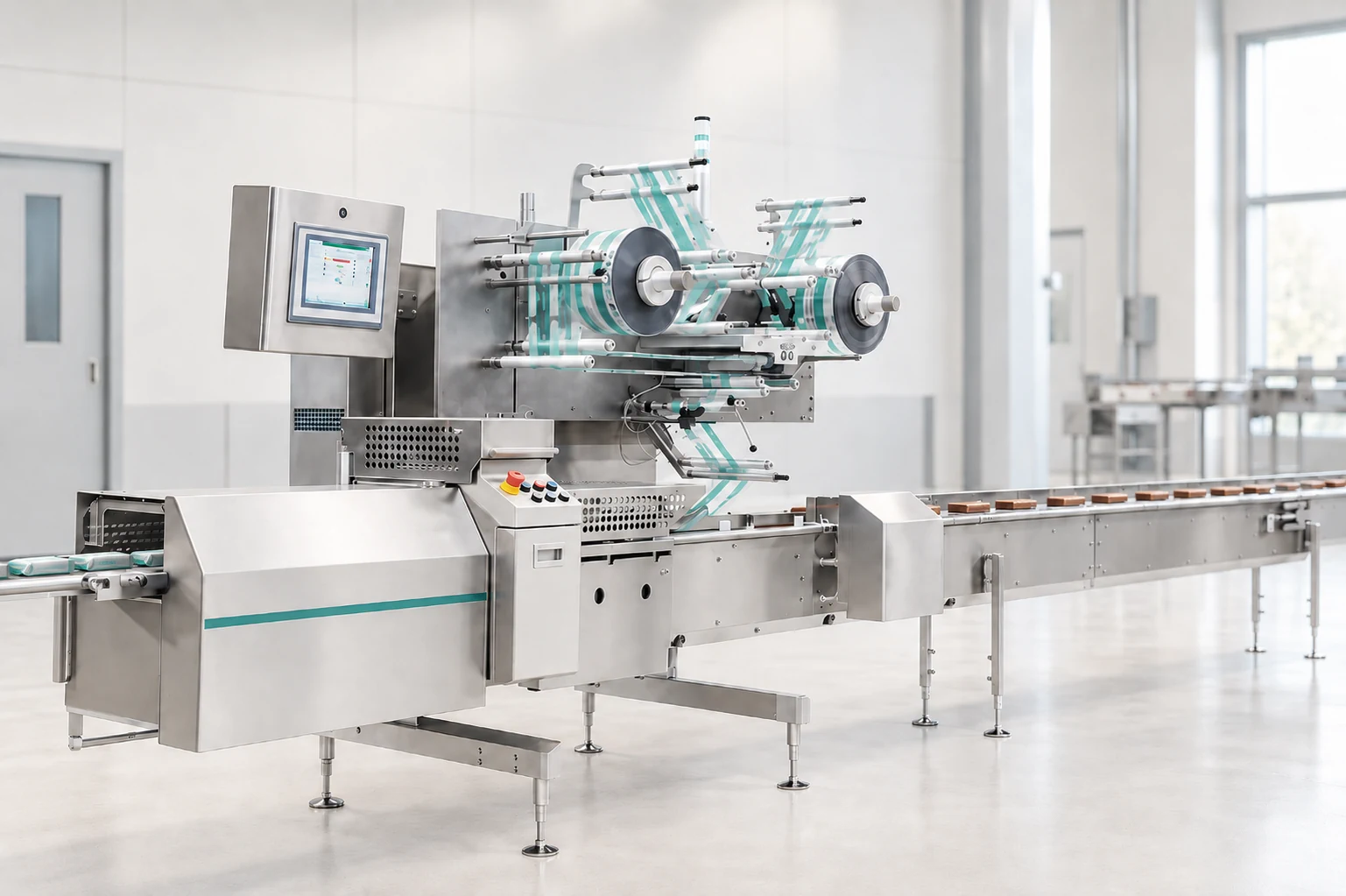
High-speed food-production lines typically consist of multiple machines with different mechanical functions, cycle characteristics and control requirements. Efficient production depends not only on each machine operating correctly, but on the entire line maintaining stable product flow and coordinated behavior across upstream and downstream equipment.
This engineering work focused on multi-machine production systems combining control architecture, PLC/PAC software, synchronized motion, robotic product handling and processing, machine vision and machine-to-machine communication.
Engineering Challenge
The main challenge was to make machines with different functions and dynamic behavior operate as one coordinated production system.
Key engineering challenges included:
- maintaining stable product flow across multiple machines,
- coordinating upstream and downstream machine states and speeds,
- preventing local disturbances from becoming line-wide production losses,
- synchronizing conveyors, servo-driven mechanisms and machine functions,
- managing product accumulation, spacing and transfer between machines,
- integrating robotic product handling and processing with product flow,
- using vision-derived product information within control and motion functions,
- coordinating machine start-up, stopping, faults and recovery,
- maintaining predictable behavior during changing production conditions,
- balancing line performance, product quality and system robustness.
The solution therefore went beyond conventional PLC programming and required automation architecture, motion control, robotics, software structure and line-level production behavior to be considered together.
My Role
My role covered automation and motion-control engineering from architecture through production-line commissioning.
Responsibilities included:
- developing the overall automation architecture and control concept,
- defining control responsibilities across multiple machines,
- developing PLC/PAC control software,
- implementing machine-to-machine communication and coordination,
- developing synchronized servo-motion functions,
- integrating robotic product handling and processing,
- integrating vision-derived product information where required,
- coordinating product flow between machine sections,
- integrating drives, sensors, actuators, safety functions and field devices,
- developing alarm, diagnostic and recovery behavior,
- commissioning individual machines and the complete production line,
- troubleshooting interactions between mechanical, electrical, motion and control systems,
- optimizing timing, synchronization and line behavior during production trials.
Engineering Approach
The engineering approach focused on treating the production system as an integrated machine network rather than as a collection of independent control panels or isolated machines.
- Define the control architecture
- Develop the control software
- Build synchronized motion functions
- Integrate robotic product handling and processing
- Integrate vision-derived product data
- Integrate and validate the complete system
- Optimize through production feedback
The objective was not only to make each machine operate correctly, but to make the complete production line behave as a stable, coordinated and efficient system.
System Architecture
Operator Layer
HMI, alarms, diagnostics and parameter interaction
Line Coordination Layer
Upstream/downstream status, speed coordination, product-flow management, accumulation logic, start/stop/recovery coordination
Machine Communication Layer
Machine-to-machine communication for operating states, product-flow information and coordination signals
Machine Control Layer
PLC/PAC controllers managing machine functions, operating modes, alarms and local coordination logic
Motion Layer
Servo drives, synchronized axes, conveyors, coordinated mechanisms and kinematic functions
Robotics & Vision Layer
Robotic product handling & processing and vision-derived product information
Field Layer
Sensors, actuators, drives, safety devices and other field equipment
Production Flow Layer
Product feeding → processing → handling → packaging → downstream equipment
Key Technologies & Methods
Technology selection varied according to the machine and application. The engineering approach was therefore driven by required machine and line behavior rather than by a single vendor or control platform.
Outcome / Engineering Value
The engineering value was not limited to automating individual machines. The key outcome was enabling multiple machines to operate as a coordinated production line with stable product flow and predictable system behavior.
The work supported:
- coordinated operation across multiple machines,
- stable product flow between upstream and downstream equipment,
- reduction of production losses caused by poor machine interaction,
- controlled accumulation, spacing and product transfer,
- synchronized motion across machine functions,
- integration of robotics and vision into the production flow,
- predictable start-up, fault and recovery behavior,
- improved diagnostics and line-level troubleshooting,
- commissioning and validation of the complete production system.
The core engineering value was the ability to translate mechanical and production requirements into coordinated line behavior across control, motion, robotics and software.
What This Demonstrates
- End-to-end automation engineering across multi-machine production systems
- Ability to coordinate independent machines as one production line
- Advanced motion-control and synchronization capability
- Product-flow management across upstream and downstream equipment
- Integration of robotic product handling & processing into production flow
- Integration of vision-derived information with control and motion functions
- Control-software development for complex machinery
- Translation of mechanical and production requirements into coordinated control behavior
- Line-level commissioning, diagnostics and troubleshooting under real production conditions